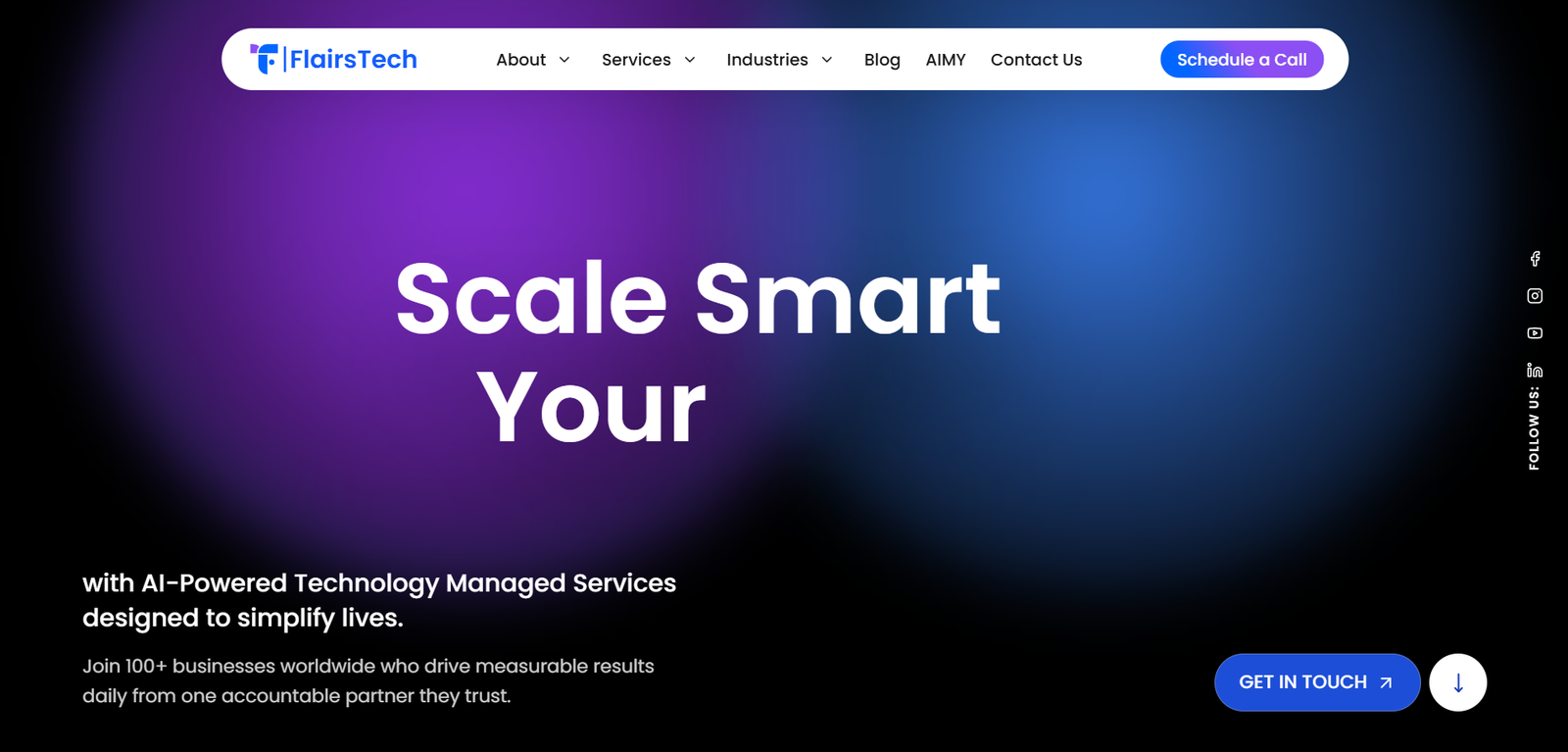
This was not a redesign that ended at a new visual layer. The work replaced a difficult-to-maintain Sage 9, Blade, and PHP frontend with a headless architecture: WordPress remained the editorial system, while Next.js became the presentation layer.
The assignment
Replace a legacy site without weakening the editing workflow.
FlairsTech’s corporate website serves prospective B2B clients and supports ongoing marketing and lead generation. The previous platform had performance problems and relied on a legacy codebase that was becoming harder to maintain and extend.
The brief combined four concerns that are often treated separately: a reusable content architecture, a careful content migration, reliable headless SEO, and strong performance across different page types and devices.
My role
I owned the WordPress side of the replatforming.
Working with one UI/UX designer and one frontend developer, I translated the proposed interface into a content system that editors could understand and the Next.js frontend could consume consistently.
- Designed reusable ACF Pro field groups, Custom Post Types, and taxonomies.
- Built custom REST API endpoints and exposed structured ACF layouts to Next.js.
- Mapped WordPress content structures to reusable frontend components.
- Migrated existing content while the content team revised selected pages.
- Implemented headless Rank Math metadata and schema support.
- Supported HubSpot, Google Analytics, technical SEO, and selected Next.js work.
- Refactored legacy PHP, Blade, and Sage 9 code where the transition required it.
The difficult part
Design, content, and frontend had to agree.
Every visual section needed to become three compatible things: a clear editing experience in WordPress, a predictable API response, and a responsive component in Next.js. A decision in one layer could not quietly break either of the others.
- Design intentUnderstand what is fixed, what is optional, and what editors need to control.
- WordPress modelRepresent the section with structured fields, validation, and reusable content types.
- Next.js componentExpose a stable response that maps cleanly to the approved interface.
That coordination became especially important while content was being migrated and revised, and while metadata and schema moved outside the traditional WordPress rendering flow.
Editing experience
Structured fields instead of a blank canvas.
Editors manage text, images, and page sections through clearly defined fields. Those fields map to approved Next.js components, keeping routine changes consistent without requiring a developer to edit code.
The system gives the content and marketing teams useful control while protecting the relationships between content, design, and frontend behavior.
Measured in production
Performance was treated as part of the platform.
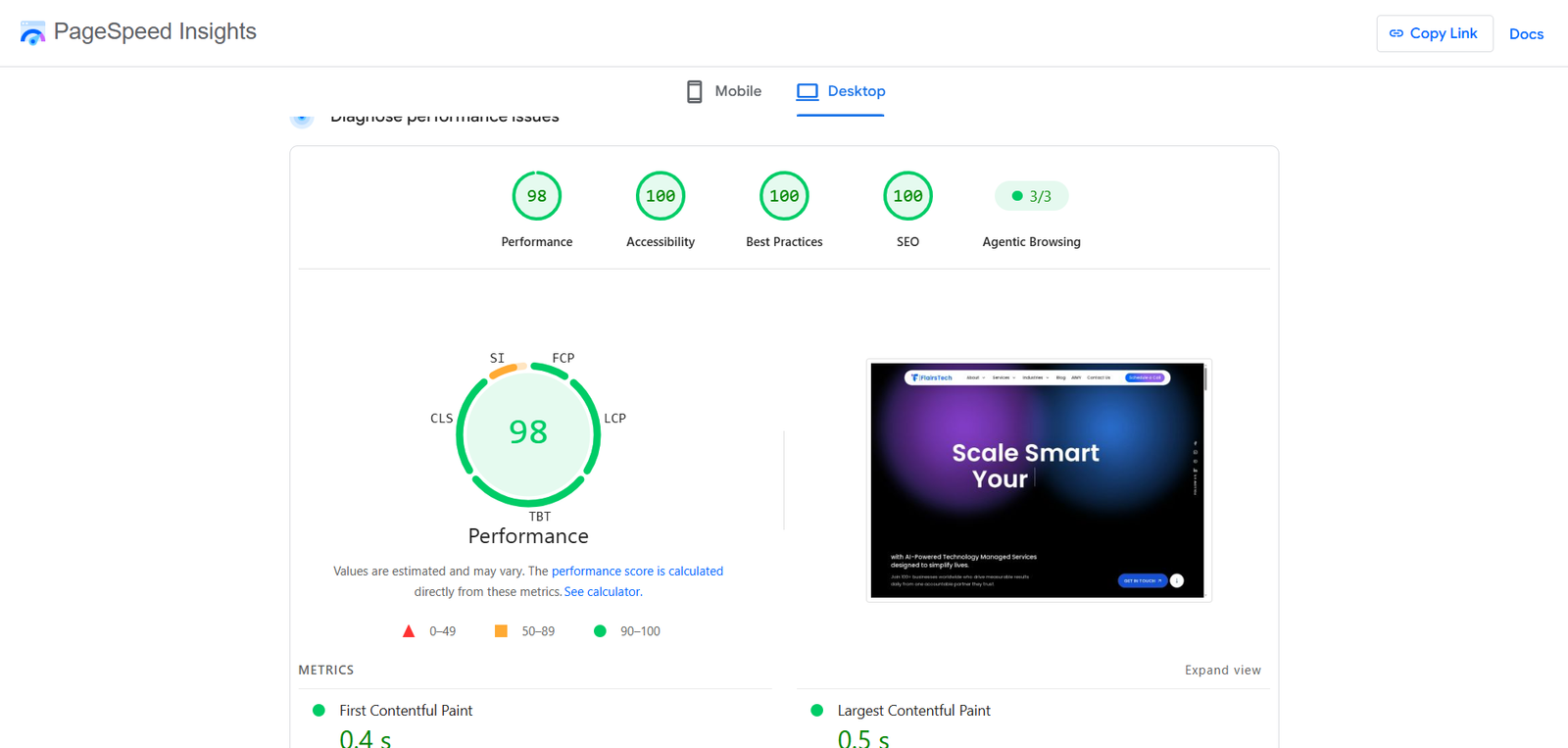
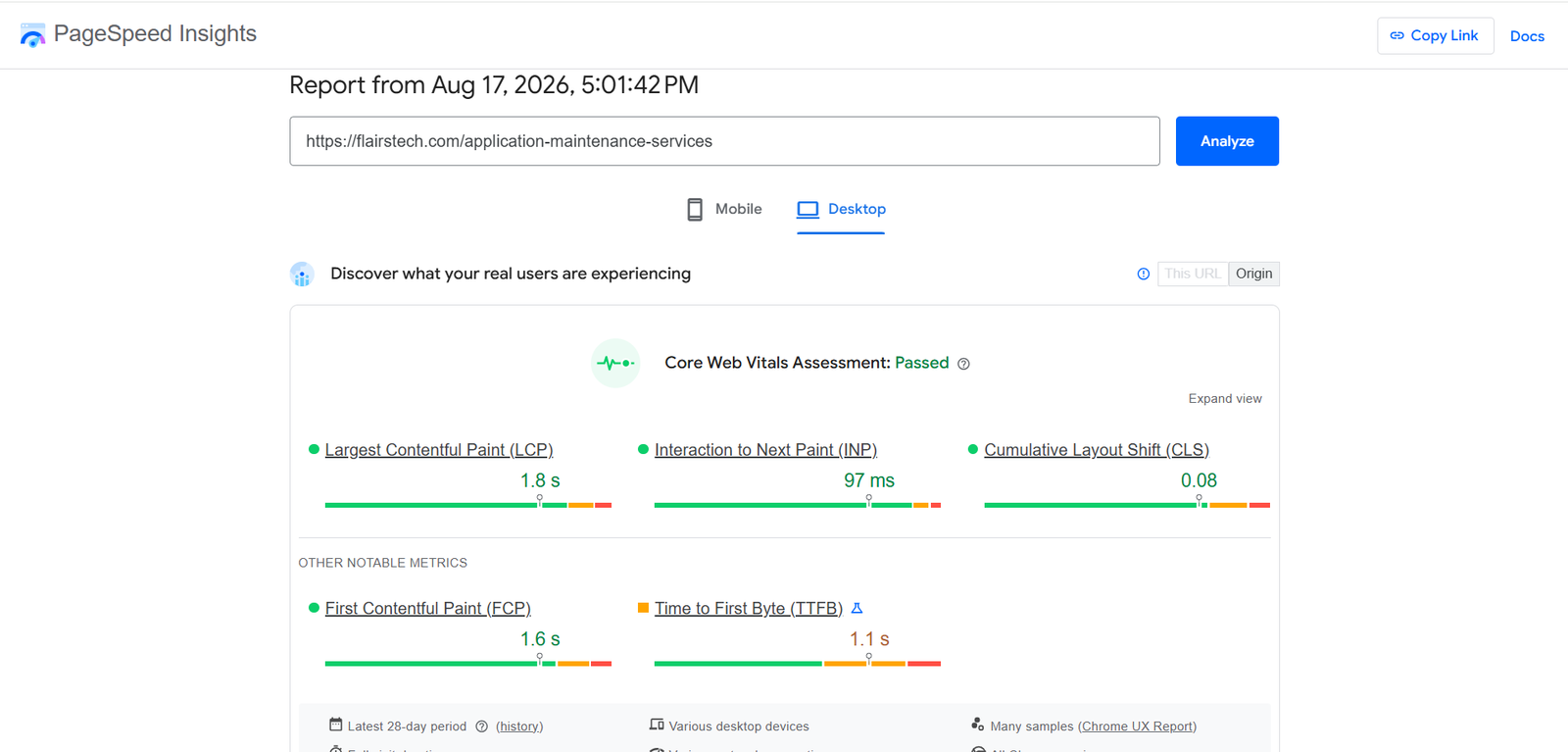
The supplied PageSpeed reports show strong results on both the homepage and a deeper service page. They also provide more useful evidence than a single headline score by showing accessibility, SEO, interaction, loading, and layout-stability signals.
After launch
The January launch was a milestone, not the finish line.
After the main Q4 2025 to January 2026 build, I continued resolving production bugs, improving technical SEO, optimizing performance, and developing further platform improvements. The result is a more maintainable corporate website and a stronger base for future content and product work.